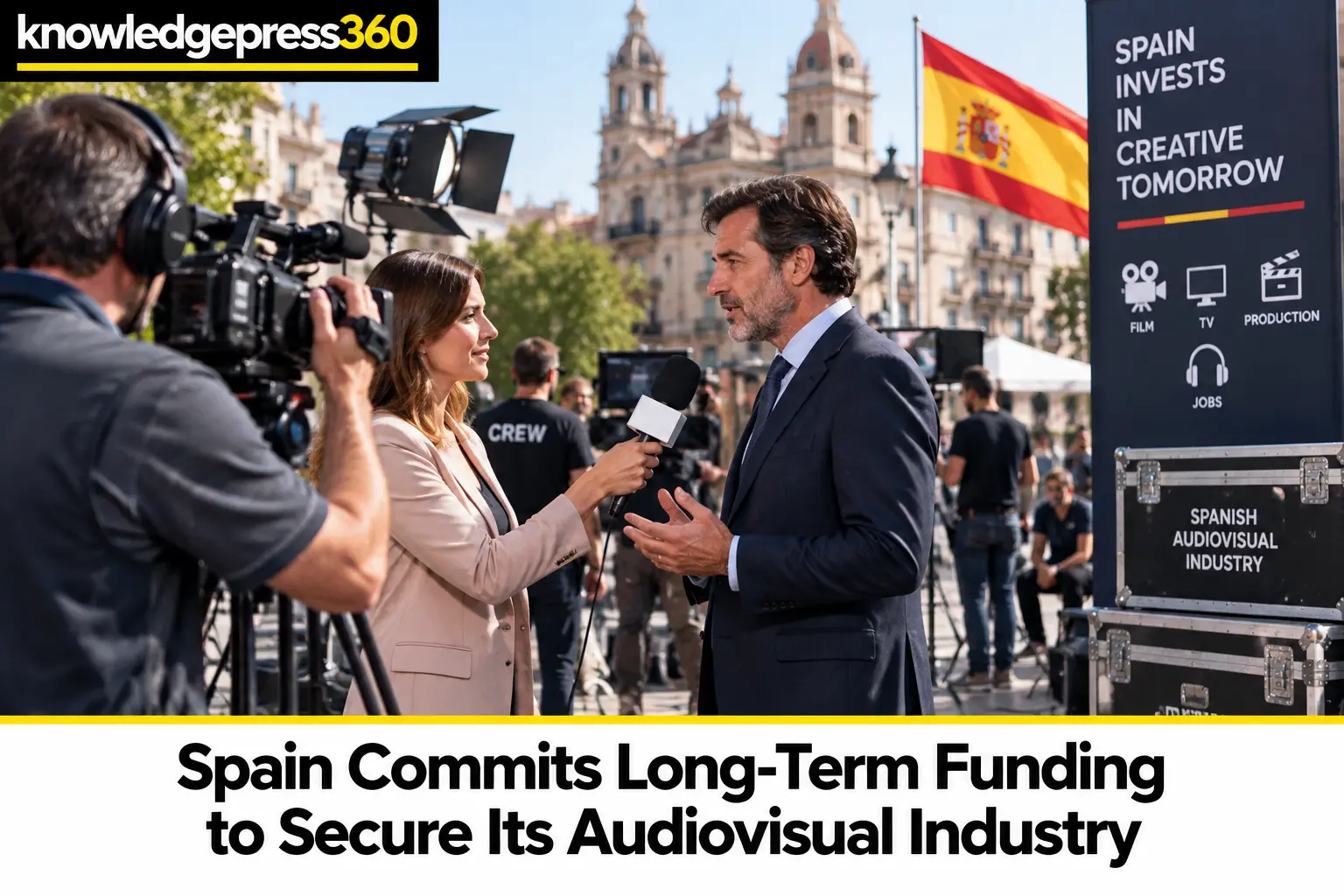
The Spanish government has announced an enduring financial and institutional commitment to bolster the nation's creative sector, confirming that state support via the Spain Crece Fund and the sovereign venture capital vehicle SETT will continue without a set expiration date. Speaking at the San Sebastian Film Festival, Minister for Digital Transformation and Public Administration Óscar López argued that successful public intervention must remain a permanent fixture to sustain the sector's current momentum. This strategic decision arrives at a pivotal juncture, as Spain solidifies its position as a powerhouse of European media production, capturing international audiences and transforming its domestic creative economy into a major driver of employment and technological development.
Record Growth and Job Creation
Official figures highlight a dramatic expansion across the Spanish media landscape over the past half-decade. Audiovisual production surged by 31 percent in 2025, propelling Spain to the status of the European Union's largest production market. This surging output has triggered a remarkable transformation in the national labour market, with sectoral employment more than doubling from approximately 30,900 professional workers in 2020 to over 64,000 in 2025. The infusion of state backing has successfully addressed historical deficiencies in capital and political resolve, allowing domestic creators to scale their operations significantly. Consequently, Spanish content now dominates global streaming charts, accounting for a substantial share of the platform's most-watched non-English series and cementing the country's reputation for exceptional storytelling and technical execution.
Capital Mobilisation for Studios
At கோயில core of this state strategy is the active deployment of capital through the Spanish Society for Technological Transformation, commonly known as SETT. The sovereign fund is currently mobilising 450 million euros in targeted investments designed to support prominent domestic production companies such as Lazona, Good Films, and Aurora Media. This financial injection aims to modernize production infrastructure, facilitate long-term co-productions with international partners, and foster high-end cinematic and animated ventures. By channeling resources directly into local studios, the government intends to retain domestic talent while attracting major foreign film crews seeking world-class locations and state-of-the-art facilities.
Sustainability and Regulatory Challenges
Despite current optimism and record-breaking accolades, industry observers note underlying questions regarding the economic sustainability of state-backed venture capital models. Ensuring that public investments generate enduring commercial viability without creating structural dependency remains a consideration for policymakers. Furthermore, future regulatory adjustments and guidelines from the European Union could influence how national funds are distributed. Navigating these evolving European frameworks while maintaining competitive financial incentives for international studios will present an administrative focus in the coming years.