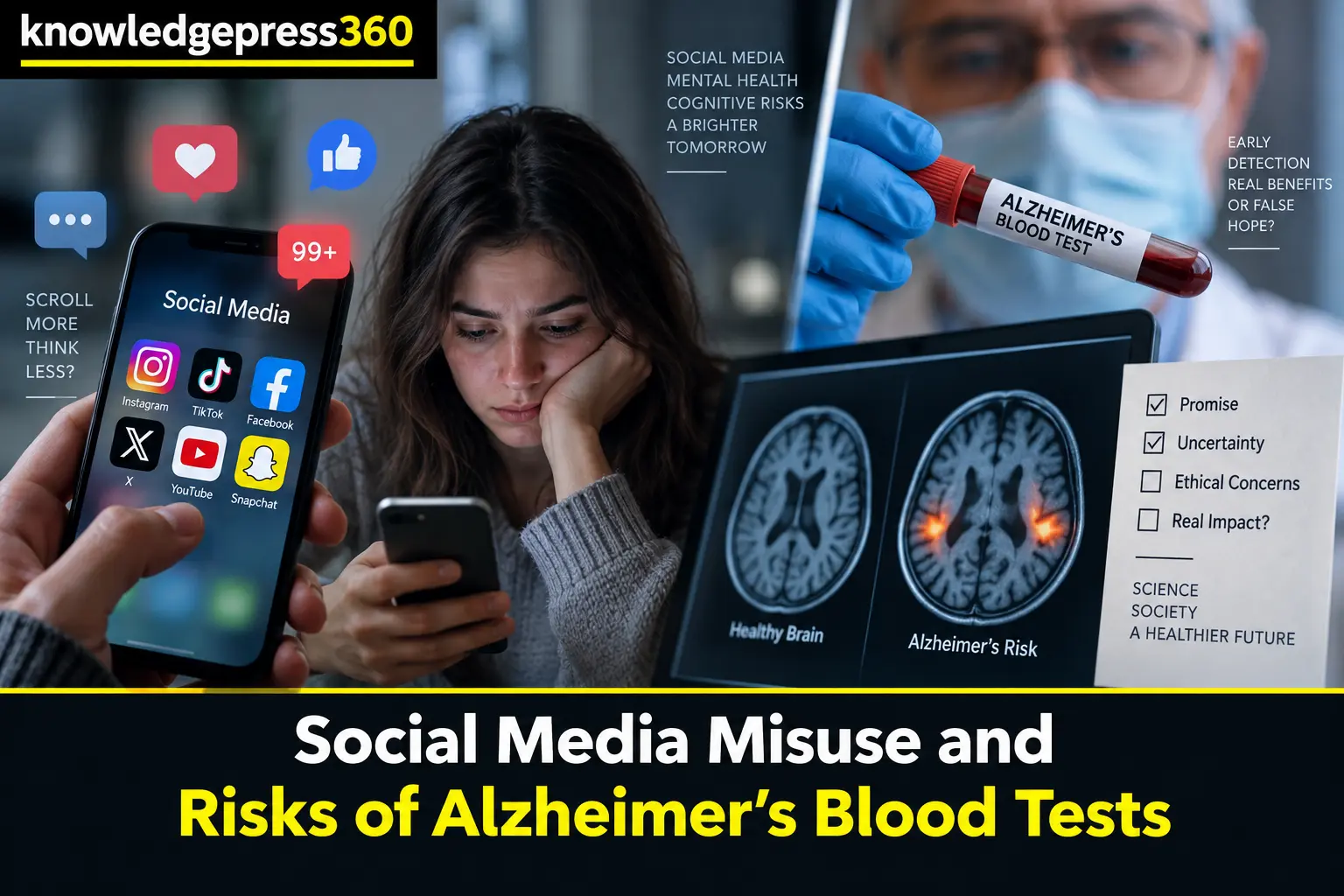
A newly published investigation reveals that mainstream social media platforms are actively driving the harmful misuse and misinterpretation of emerging Alzheimer's disease blood tests. While blood-based biomarkers represent a major scientific leap forward for diagnosing cognitive decline, their digital promotion often bypasses clinical reality. The findings underscore a pressing public health challenge as digital networks increasingly shape medical expectations and patient decision-making around neurodegenerative conditions.
Misleading Marketing Across Platforms
Researchers at the University of Sydney turned their focus to digital spaces to understand how cutting-edge diagnostics are framed for the general public. Their investigation examined 188 distinct posts mentioning Alzheimer's or dementia blood tests across major platforms including Facebook, Instagram, and TikTok. Together, the accounts responsible for this content commanded a massive combined global audience exceeding 114 million followers. The sheer scale of these digital footprints ensures that misleading assertions regarding early diagnostics reach vast numbers of vulnerable individuals looking for clarity on cognitive health.
Among the key insights generated by the study, more than one-third of the social media posts analysed actively promoted these blood-based biomarker tests for asymptomatic individuals. Blood tests such as p-tau217 and p-tau181 are specifically designed to detect abnormal proteins associated with brain changes, offering a far faster and more accessible alternative to traditional lumbar punctures or brain imaging. However, global clinical consensus dictates that these diagnostics should never be utilised on healthy people who display no outward symptoms of cognitive decline. Despite this clear medical guideline, digital content creators frequently present the technology as a universal screening tool for anyone wishing to check their brain health.
Financial Incentives Drive Misinformation
The dissemination of inaccurate medical guidance online is heavily influenced by commercial motivations rather than objective clinical science. Investigators discovered a striking correlation between the commercial backing of an account and the promotion of inappropriate screening practices. Specifically, accounts with explicit financial interests were found to be more than three times as likely to push blood testing for individuals without any symptoms. This profit-driven push often omits critical context, such as the absolute necessity of comprehensive clinical assessments alongside biomarker screening.
Furthermore, the quality of information provided across these influential channels remains remarkably low. The analysis demonstrated that only 36 per cent of the evaluated posts included any supporting evidence for their bold claims, and fewer than a quarter of those referenced a specific scientific study. When commercial entities or independent influencers promote diagnostic tools without acknowledging fundamental clinical limitations, they create a distorted perception of certainty. This environment leaves everyday users ill-equipped to evaluate the genuine utility and appropriate context of advanced neurological diagnostics.