A major new study published on August 26, 2026, in Nature Medicine has provided evidence that the modern recombinant shingles vaccine, Shingrix, is associated with a reduced risk of cardiovascular disease, heart failure, and stroke compared to older immunization methods. Shingles is a painful rash condition caused by the reactivation of the varicella-zoster virus later in life, typically affecting individuals over the age of 50. While previous observational studies indicated potential cardiovascular perks tied to Shingrix, they often suffered from healthy vaccine bias—the confounding reality that individuals who choose to get vaccinated tend to be inherently healthier and have better access to healthcare than those who do not.
University of Oxford researchers utilize a natural experiment to evaluate Shingrix records
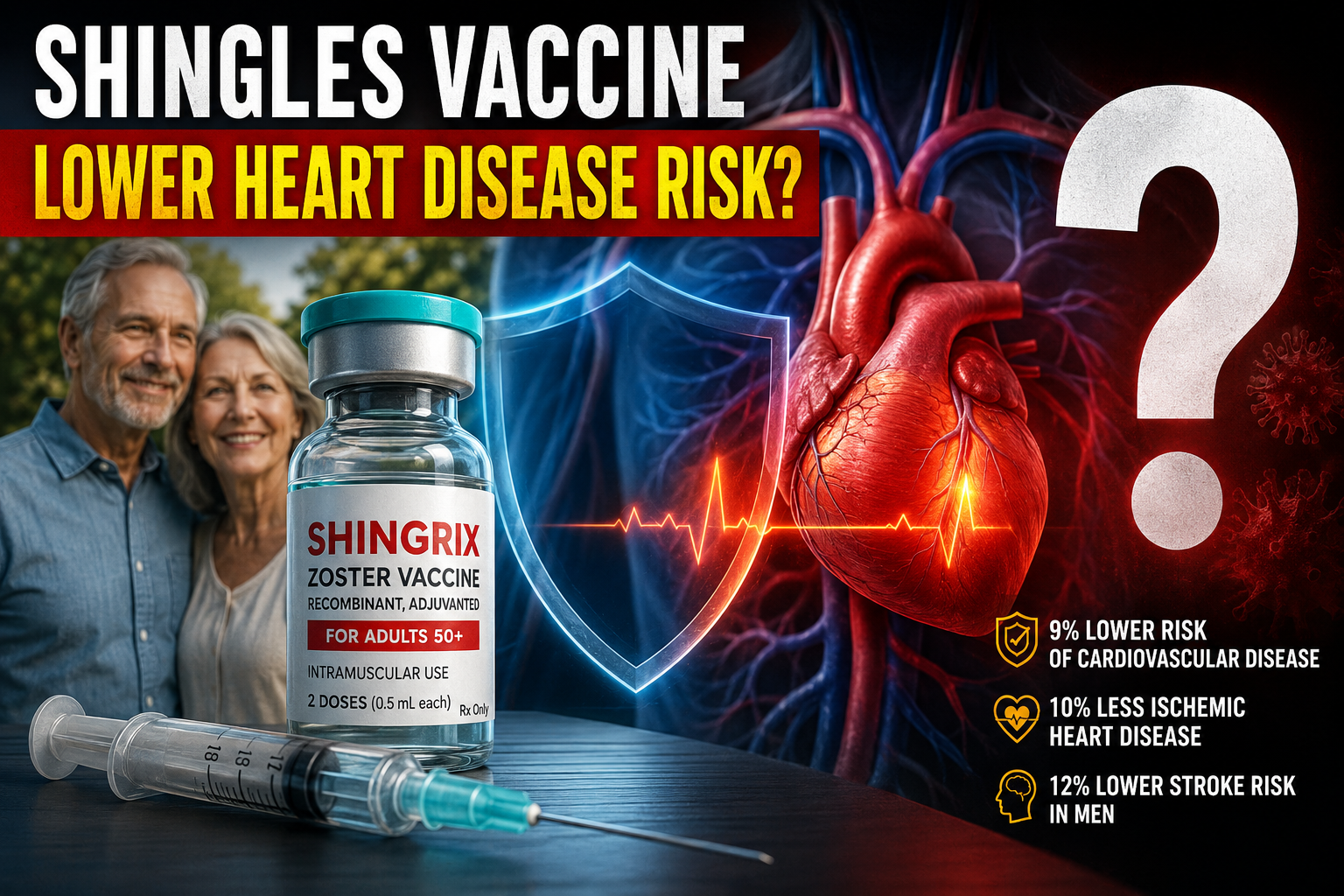
To address observational flaws, a research team from the University of Oxford and NIHR Oxford Health utilized a natural experiment approach. They analyzed electronic health records from the U.S.-based TriNetX network, taking advantage of the policy shift in October 2017 when the live-attenuated vaccine Zostavax was officially replaced by Shingrix. By evaluating two matched cohorts of more than 36,000 individuals aged 60 and older who received either vaccine around the switchover date, the team tracked outcomes over a seven-year period. The data revealed that individuals who received Shingrix experienced a 9% lower overall cardiovascular disease burden, alongside a 10% reduction in ischemic heart disease and a 12% reduction in heart failure.
Nature Medicine findings show specific cardiovascular and stroke risk reductions
Further analysis of the matched cohorts demonstrated additional health differences between the two recipient groups. Men in the Shingrix group exhibited a 12% lower risk of stroke, and all recipients saw a 7% reduction in atrial fibrillation. Experts have noted that the natural experiment design successfully bypasses traditional observational flaws by comparing patients on either side of the 2017 policy transition. At a population level, researchers point out that even modest individual risk reductions could influence cardiovascular outcomes given how widely the shingles vaccine is administered to older adults.
Epidemiologists emphasize that observational data cannot establish direct causation
Despite the positive associations reported in Nature Medicine, researchers, including study co-author Maxime Taquet and external specialist Emily Rayens, emphasize that the study remains observational and cannot definitively establish causation. The exact biological mechanism—such as whether preventing varicella-zoster reactivation directly safeguards blood vessels or if secondary immune pathways are at play—remains under investigation. Furthermore, the TriNetX network primarily captures individuals with private or commercial health coverage, meaning findings may not fully generalize to populations relying on public health insurance.