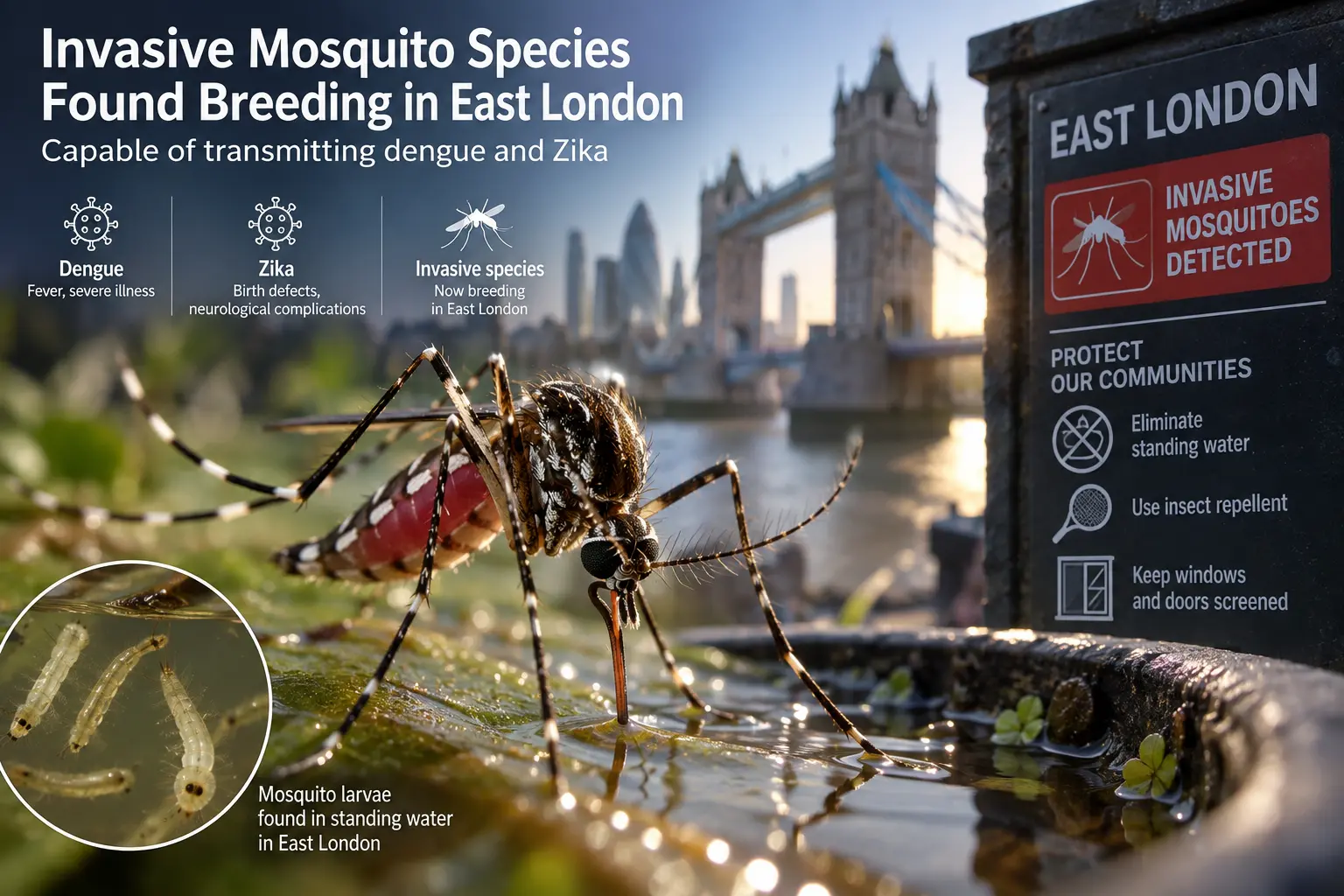
The recent discovery of breeding Aedes aegypti mosquitoes in residential properties across east London marks a critical turning point for British biosecurity and public health surveillance. While vector-borne tropical viruses such as dengue, Zika, and chikungunya have historically remained confined to warmer global regions, finding active larvae and adult specimens on British soil demonstrates how interconnected modern trade routes and localized environmental changes have become. Health authorities have moved quickly to reassure the public that the immediate risk of transmission is exceptionally low, yet the milestone underscores the complex challenges that European nations face as shifting climate patterns potentially expand the viable habitats of invasive vectors.
Discovery of Aedes aegypti Larvae in East London Properties
The detection occurred through the routine operations of the UK Health Security Agency and its dedicated Mosquito Watch surveillance scheme. Field inspections at specific residential addresses in east London revealed the presence of Aedes aegypti mosquitoes alongside viable larvae. Although historical records show that this specific vector has been detected in the UK on prior occasions, health officials confirmed that this September announcement represents the very first documented instance of local reproduction. In response to the findings, environmental health teams deployed targeted eradication protocols, applying specialized larvicides to eliminate the local population and prevent any wider dissemination across the urban landscape. Specialists emphasize that these insects are highly unlikely to have arrived by natural migratory flight, pointing instead to accidental importation mechanisms where resilient eggs or adult insects hitchhike via international cargo, passenger vehicles, luggage, or imported botanical products.
Public Health Risk Assessment and Vector Limitations
Despite the startling nature of finding a tropical disease vector within the capital, epidemiological experts maintain that the overall threat level to the British public remains minimal. Dr Jolyon Medlock, head of medical entomology and zoonoses ecology at the UK Health Security Agency, noted that extensive follow-up testing revealed zero evidence of human infections originating from the site. Furthermore, comprehensive perimeter sweeps confirmed that neither adult mosquitoes nor larvae had spread into nearby public parks or surrounding neighborhoods. Specialists explain that the broader British climate remains fundamentally too cold for Aedes aegypti to establish permanent residency or survive long-term environmental pressures without artificial shelter. Nevertheless, academic researchers warn that this incident should serve as a stark reminder. Professor Heather Ferguson of the University of Glasgow described the event as a significant warning sign, noting that rising global temperatures and prolonged summer heatwaves could gradually render Northern European climates far more hospitable to these dangerous species over the coming decades.