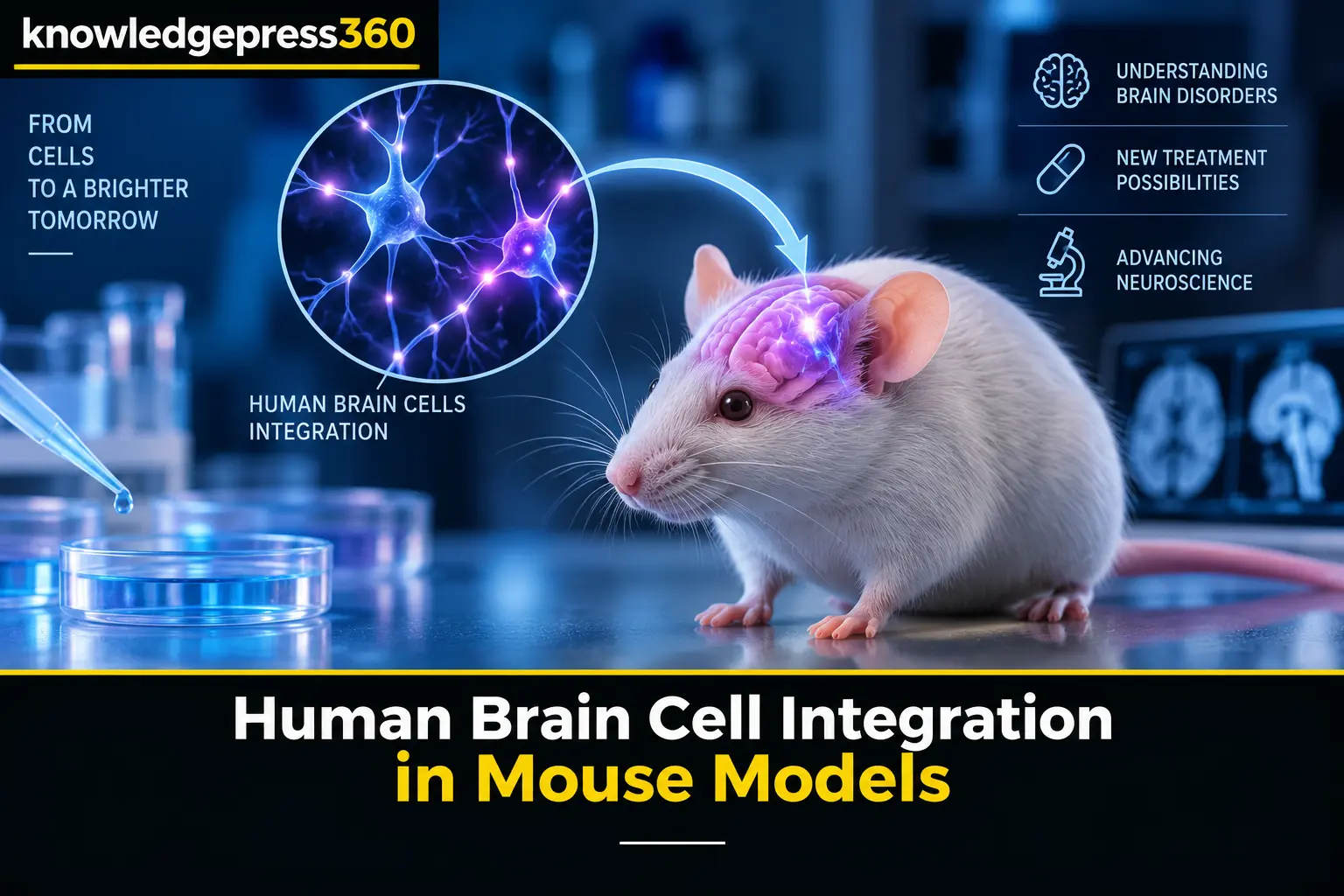
A research team at Stanford University has published a milestone study in Nature detailing the most extensive integration of human brain cells into animal models to date. Laboratory-grown cerebral organoids have long offered neuroscientists a window into early human development, yet they historically lacked blood vessels and a living host environment. Previous attempts to transplant human tissue into rodent brains routinely faced a major hurdle: the dense, established architecture of the host brain forced a fierce competition for space, limiting how far the human cells could mature and connect. The latest experimental approach successfully overcomes this bottleneck by creating vacant cranial room, opening new pathways for investigating complex neurological and neuropsychiatric conditions safely.
Emptying the Cranial Cavity
To clear the path for successful integration, the Stanford investigators engineered newborn mice so that the precursor cells responsible for forming the cerebral cortex failed to survive. This genetic modification left an empty brain cavity, effectively eliminating the natural tissue competition that had previously stunted transplanted organoids. When human cerebral organoids were placed into this vacant space shortly after birth, they expanded rapidly to occupy most of the available volume. As the tissue grew, it established vital functional connections, wiring directly into the host animals' nervous systems and establishing a living interface between human cellular material and a mammalian body environment.
Unprecedented Cellular Maturation
Detailed analyses of the hybrid models revealed remarkable anatomical developments within the transplanted human tissue. Researchers identified specialized cell types, including pyramidal projection neurons that extended their reach all the way into the animals' spinal cords. The tissue also fostered super-sized neurons typically associated with large-brain mammals such as primates, elephants, and whales. Co-author Sergiu Pașca noted that these advanced neuro-chimeric models provide an exceptionally powerful system for exploring what makes the human brain uniquely susceptible to devastating conditions like cerebral palsy, offering a realistic testing ground that standard petri dish cultures cannot replicate.
Ethical Oversight and Limits
While the advancement promises profound insights for neurobiology, it has naturally reignited bioethical debates surrounding the creation of mammalian chimeras. To address these concerns, the project underwent rigorous independent oversight, including extensive review by specialized bioethics panels. Furthermore, developmental neurobiologists point out that the timing of the transplantation—performed days after birth, well past the point when the brain's core wiring is already established—ensures that human cells cannot hijack complex thinking or alter the host's cognitive architecture. Behavioural evaluations confirmed that the rodents maintained normal intellect and showed no signs of enhanced cognitive capacity.