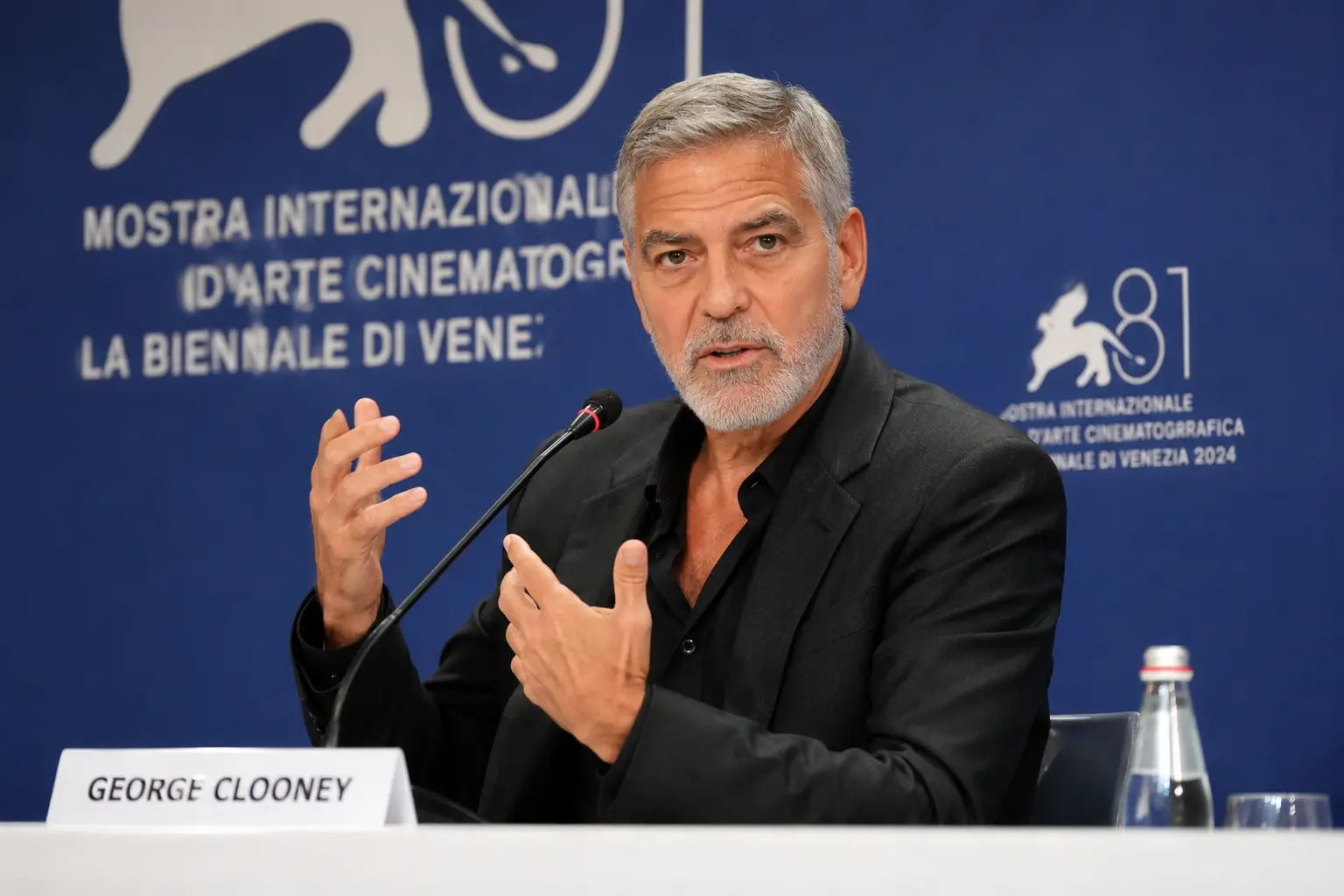
During the opening ceremony of the Venice Film Festival, actor, director, and producer George Clooney used his acceptance speech for the Golden Lion for Lifetime Achievement to deliver a critique of political authoritarians. As cultural institutions worldwide face pressures from shifting political landscapes and corporate consolidation, Clooney's remarks offer a reminder of the role that art and journalism play in challenging state and corporate overreach. His address resonated far beyond the festival palazzo, sparking conversations about the protection of creative freedom and the resilience of democratic discourse in an era marked by rising populism and media concentration.
Acceptance Speech Warning Against Authoritarians at the Venice Film Festival
Reflecting upon a 45-year career in the entertainment industry during the September 2026 festival, Clooney accepted the prestigious Golden Lion with characteristic self-deprecation before pivoting to sociopolitical commentary. He asserted that contemporary political and financial elites actively exploit fear to divide society, drawing a line between modern populist strategies and historical patterns of authoritarian control. According to the filmmaker, the primary targets of any authoritarian regime are never mainstream politicians; instead, repressive forces systematically move to silence independent journalists, probing writers, and artists who refuse to offer simplistic answers.
Clooney maintained that while cinematic works cannot single-handedly halt military conflicts, reduce inflation rates, or alter election outcomes, they remain indispensable cultural instruments. By cultivating empathy, films remind audiences that total strangers possess shared human experiences and vulnerabilities. He stated that stories are inherently dangerous to individuals who peddle in fear, noting that those who attempt to ban books, suppress music, and censor cinema have never occupied the heroic side of history.
Public Defense of Mark Ruffalo Amid Paramount and Warner Bros Discovery Merger Backlash
Beyond his reflections on global politics, Clooney used his platform in Venice to address industry controversies, specifically offering a public defense of fellow actor Mark Ruffalo. Ruffalo found himself at the center of a public storm after launching social media attacks against the proposed $111 billion Paramount acquisition of Warner Bros Discovery. The actor criticized the merger over potential job losses and corporate consolidation, while also targeting the business ties of the Ellison family, whose scion David Ellison serves as Paramount chief executive, pointing to Oracle connections with the Israeli military following the 7 October Hamas attack.
These online statements triggered a backlash from Paramount executives and critics who accused Ruffalo of invoking antisemitic tropes. Ruffalo steadfastly rejected these accusations, maintaining his criticism of the corporate deal and Oracle's business associations. In the wake of the dispute, over 170 Jewish artists, academics, and public figures rallied behind the actor by signing an open letter warning against attempts to silence critics. Speaking to reporters ahead of his award ceremony, Clooney explicitly defended Ruffalo's right to speak freely, describing him as a good man while echoing broader industry anxieties regarding job security and corporate media monopolies.