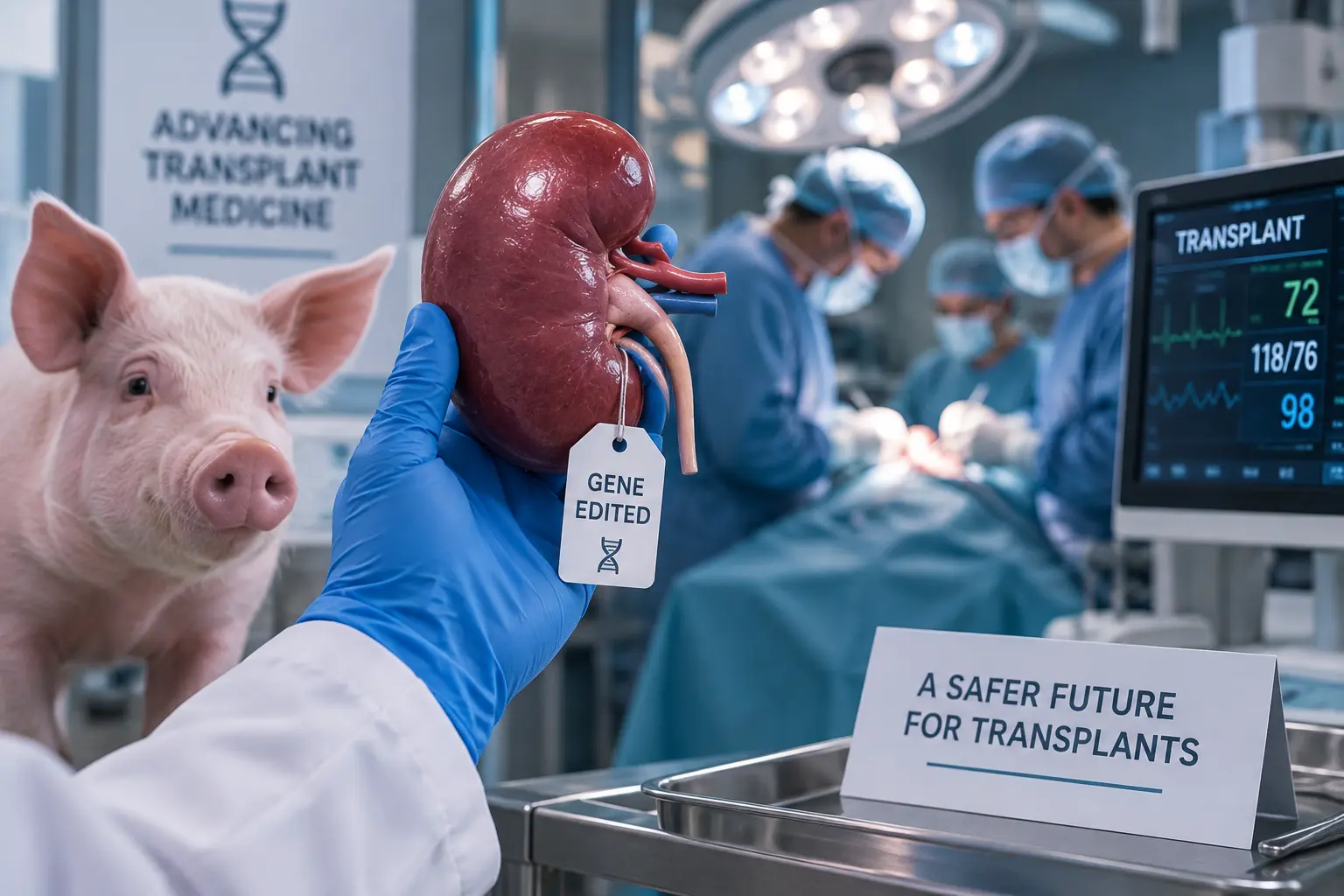
Medical history has entered a new chapter as clinical researchers confirm that patients who received genetically engineered animal organs have successfully transitioned to human donor kidneys [1]. This unprecedented achievement addresses one of the most stubborn bottlenecks in modern medicine: the severe, persistent shortage of human organs that leaves many individuals stranded on grueling dialysis waiting lists [1]. By demonstrating that cross-species transplants can act as a viable bridge without sensitising the patient's immune system against future human organs, biotech pioneers and hospital surgical teams have unlocked a promising avenue for saving lives. The milestone brings the realm of xenotransplantation firmly into the domain of clinical reality, offering tangible relief to patients facing difficult prognoses [1].
Tim Andrews and the Record-Breaking Xenograft at Mass General Brigham
The viability of this approach was underscored by the landmark case of Tim Andrews, a 66-year-old resident of New Hampshire who faced kidney failure driven by type 2 diabetes and an O-positive blood type [2, 5]. Given his specific blood profile, medical professionals estimated he could face a prolonged wait for a human organ, a timeline that exceeds the typical expectancy for patients reliant on chronic dialysis [5]. In response, medical researchers at Mass General Brigham secured special regulatory clearance to perform a radical procedure [2]. On January 25, 2025, surgical teams transplanted a genetically modified pig kidney into Andrews [2, 5]. The organ was harvested from a Yucatan miniature pig engineered via CRISPR-Cas9 technology to feature 69 precise genetic changes [2]. These alterations were designed to remove rejection-causing genes, insert human compatibility markers, and deactivate potentially dangerous animal retroviruses . The xenograft functioned continuously for an impressive 271 days, granting Andrews nearly a year free from the exhausting routine of dialysis .