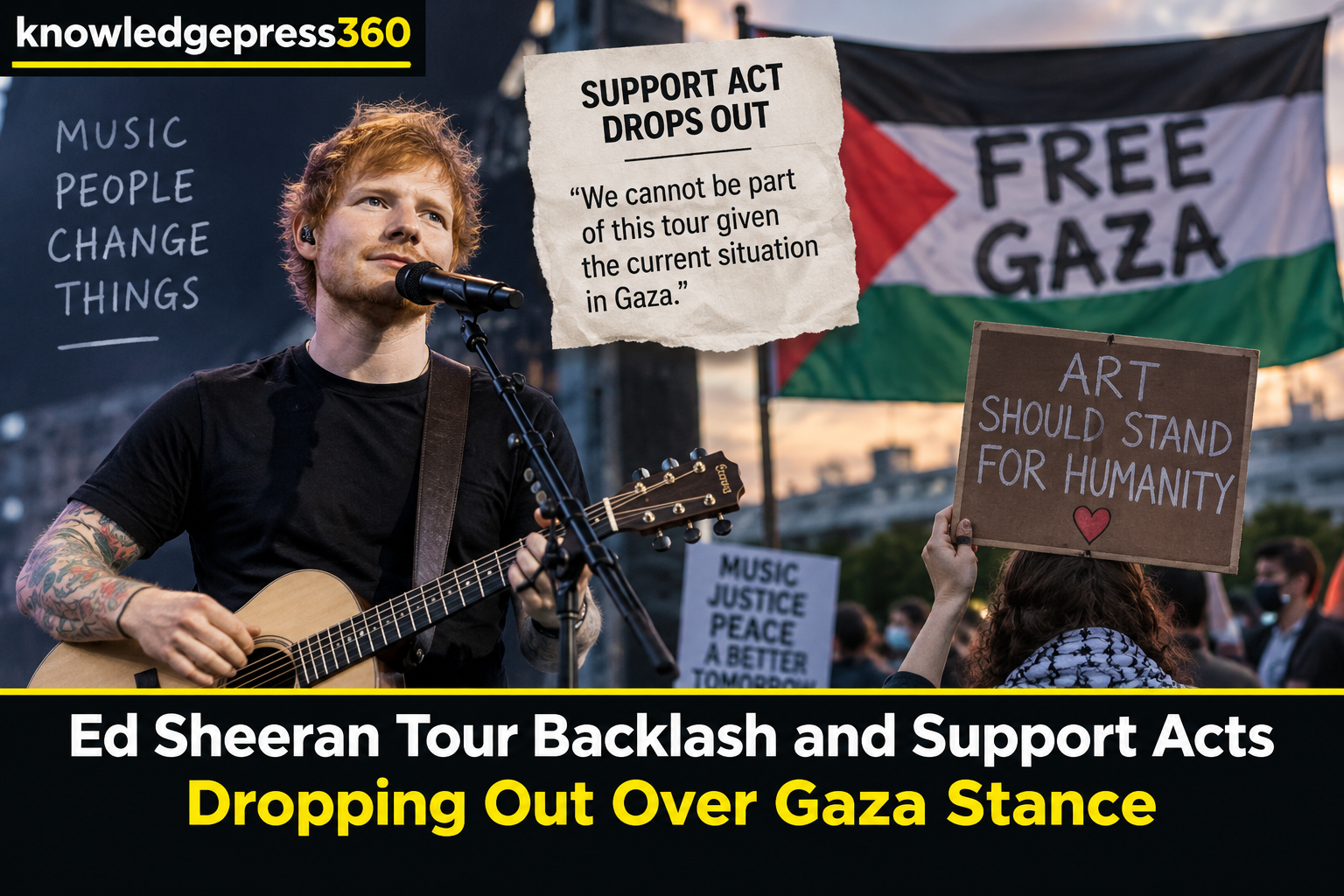
Ed Sheeran’s high-profile North American stadium tour has descended into profound turmoil following the abrupt removal of opening rapper Macklemore and the subsequent withdrawal of every remaining support act in solidarity. The cultural firestorm erupted after Macklemore took the stage at MetLife Stadium in New Jersey on September 4 and 5, using his allocated performance time to deliver pro-Palestinian remarks and perform his track "Hind’s Hall," a song that criticizes the censorship of demonstrations surrounding the Israel-Hamas conflict. Shortly after these performances concluded, tour promoters and several major stadium venues intervened. Venue owners asserted that the manner of the rapper's political advocacy had crossed corporate and contractual boundaries, triggering an industry clash over free expression on live entertainment stages. This escalating controversy matters deeply because it lays bare the intense ideological polarization confronting modern live music, where artists, corporate venue owners, and concert promoters find themselves locked in disputes over geopolitical neutrality, censorship, and the responsibilities of global celebrities.
Macklemore Ejected Over Gaza Remarks
The immediate catalyst for the widespread tour crisis was the direct ejection of Macklemore from the remaining U.S. stadium dates. Following his performances at MetLife Stadium, multiple venues informed tour organizers that they would refuse to host upcoming concerts if the rapper remained on the bill. New England Patriots billionaire Robert Kraft, who owns Gillette Stadium near Boston, publicly confirmed that he personally barred Macklemore from performing at his venue. Kraft defended the decision by stating that while individuals possess the right to advocate for various causes, passionate political messaging on a commercial stage should not obscure the actions and responsibility of Hamas. Promoters ultimately acted on these venue ultimatums, removing Macklemore from his contractual opening slot. This corporate intervention mobilized activist groups and cultural commentators, igniting a public debate over whether venue operators should possess the authority to censor politically charged artistic expression.
Support Acts Quit In Protest
The removal of the rapper triggered a swift and decisive domino effect across the entire tour roster, as every remaining support act abandoned the schedule in strict protest. Artists including Finneas, Danish pop band Lukas Graham, singer-songwriter Aaron Rowe, and Sheeran’s Irish backing band, Beoga, announced their immediate departure from the remaining dates. These supporting musicians cited deep opposition to the censorship of Macklemore and expressed solidarity with the Palestinian people. Their collective walkout left the headline performer facing a depleted touring lineup and logistical pressure. Commentators and industry analysts noted that this mass departure transformed a localized dispute into an industry-wide crisis, signaling that supporting musicians are willing to sacrifice major commercial opportunities to take a public stand on contentious geopolitical issues.