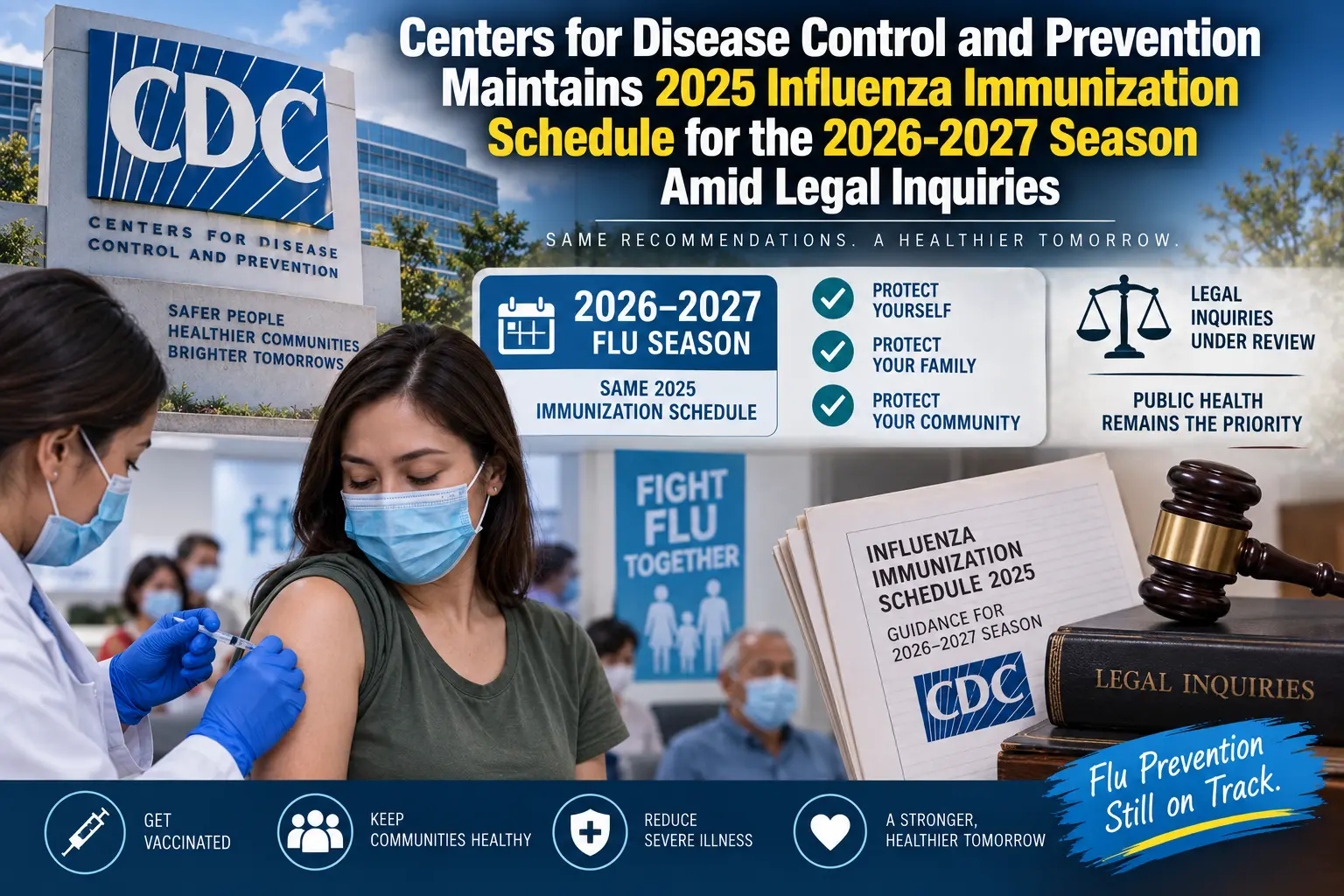
Public health planning for the upcoming winter period requires substantial administrative stability, yet regulatory environments often face unexpected friction. As medical professionals across the United States prepare for the annual autumn immunization drive, federal health authorities have clarified that clinical protocols will remain consistent with previous frameworks despite unfolding legal complexities. This continuity ensures that healthcare workers can rely on established distribution pathways and patient counseling strategies without facing sudden procedural disruptions.
Centers for Disease Control and Prevention Sustains Previous Schedules Amid Legal Inquiries
The Centers for Disease Control and Prevention officially announced that seasonal influenza vaccination recommendations originating from the July 2025 immunization schedule remain entirely in effect for the 2026-2027 influenza season. Published on September 1, 2026, the updated clinical considerations address ongoing legal uncertainties and administrative inquiries that have recently impacted federal health policy discussions. By maintaining the established framework, the agency aims to prevent confusion among healthcare professionals and public health officials tasked with managing seasonal influenza prevention across diverse patient demographics.
The guidance underscores the critical role of routine annual vaccination for all eligible individuals using age-appropriate formulations. While the broader schedule is preserved, the document provides detailed parameters for specific clinical populations. For instance, solid organ transplant recipients aged 18 through 64 who are currently undergoing immunosuppressive regimens may receive either high-dose inactivated influenza vaccines or adjuvanted alternatives as acceptable clinical options, without a formal federal preference over other standard age-appropriate formulations.
Trivalent Vaccine Composition and Formulations Approved by the Food and Drug Administration
The overarching clinical strategy relies on licensed biological products designed to stimulate antibody production against the surface antigen hemagglutinin. U.S. seasonal influenza vaccines deployed for the 2026-2027 season are strictly trivalent. These formulations incorporate specific viral components targeting an influenza A virus of the subtype A(H1N1)pdm09, an influenza A(H3N2) virus, and an influenza B virus belonging to the B/Victoria lineage, with exact strains determined annually by the Food and Drug Administration.
Three primary categories of influenza vaccines remain licensed and available for the upcoming campaign. Inactivated influenza vaccines include standard-dose unadjuvanted formulations grown in either eggs or cell culture, such as Fluzone, Flulaval, Fluarix, and cell-based Flucelvax, all approved for individuals aged six months and older. Additionally, live attenuated influenza vaccines are available as nasal sprays for non-pregnant individuals aged two through 49 years, while recombinant influenza vaccines produced via advanced technology are approved for individuals aged nine and older.